Understanding the Different Types of Stroke
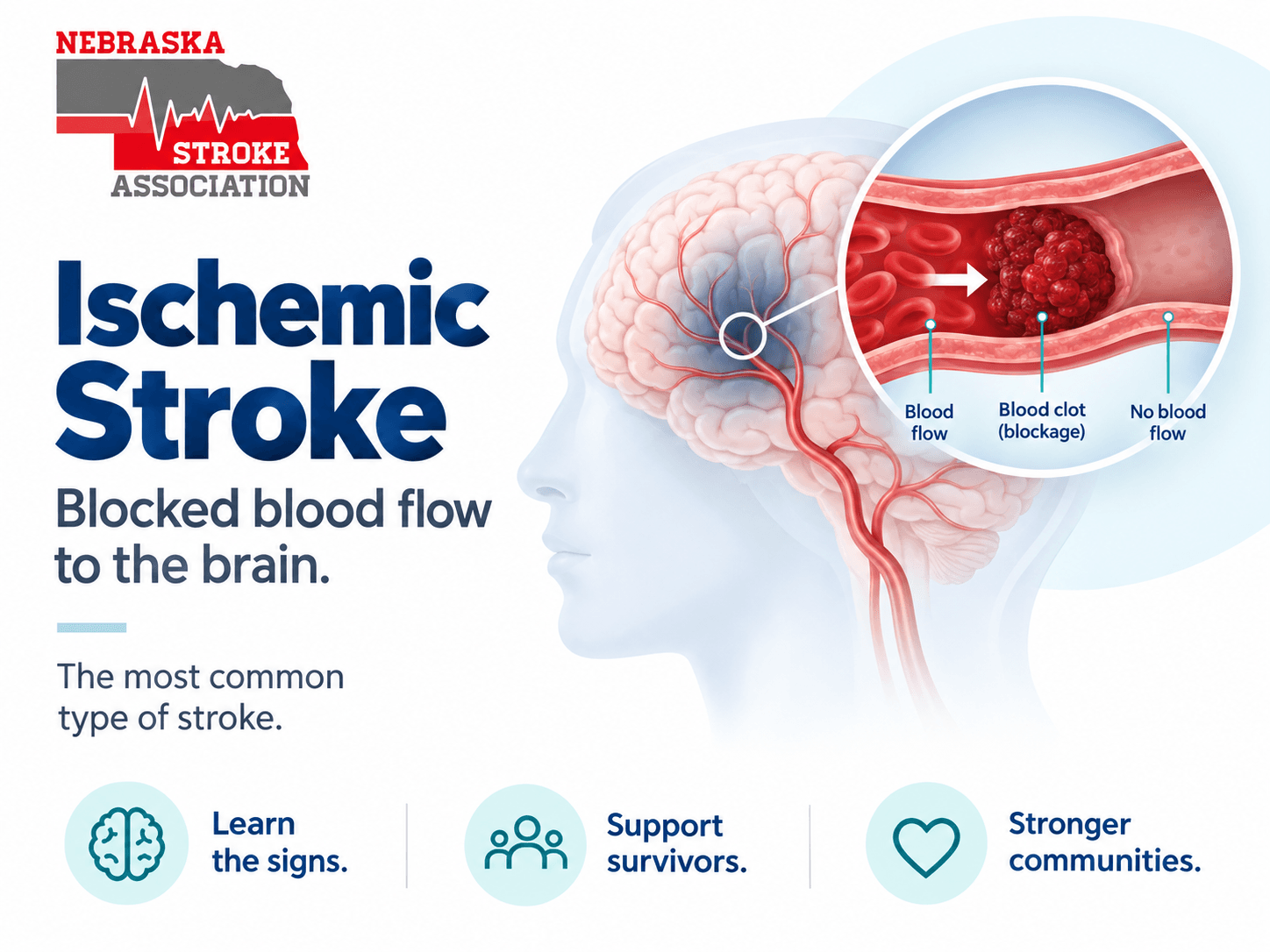
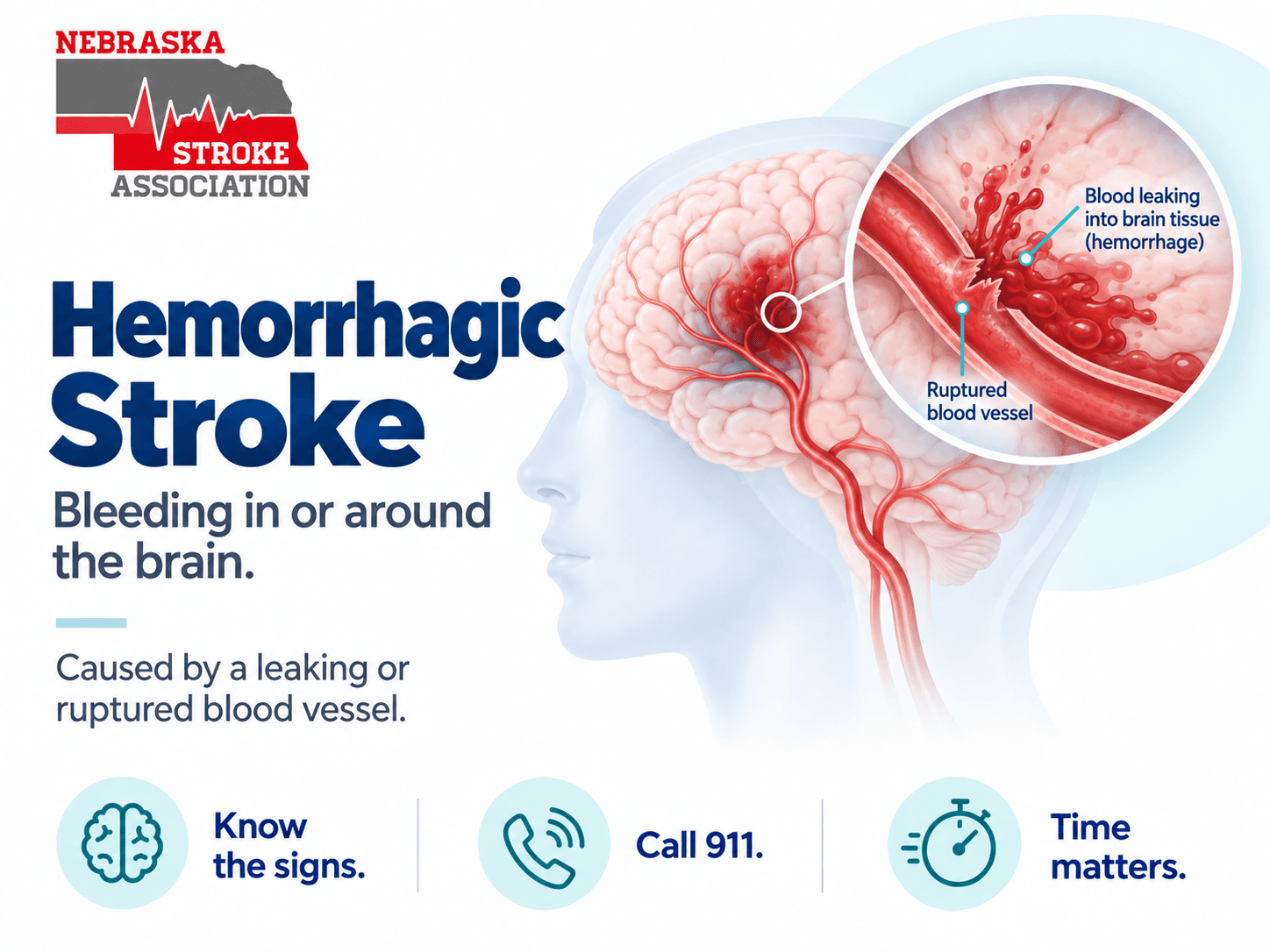
A stroke happens when blood flow to part of the brain is blocked or when a blood vessel in or around the brain breaks. Without a steady supply of blood and oxygen, brain cells can become damaged or die. Stroke is a medical emergency, and every minute matters.
Every Stroke Is Different
The effects of a stroke depend on where it occurs in the brain, how much brain tissue is affected, and how quickly treatment begins. A stroke may affect movement, speech, vision, memory, emotions, balance, swallowing, or other abilities.
Know the Warning Signs: BE FAST
- B – Balance: Sudden dizziness or loss of balance
- E – Eyes: Sudden vision changes
- F – Face: One side of the face droops
- A – Arms: One arm becomes weak or numb
- S – Speech: Speech becomes slurred, confused, or difficult
- T – Time: Call 911 immediately
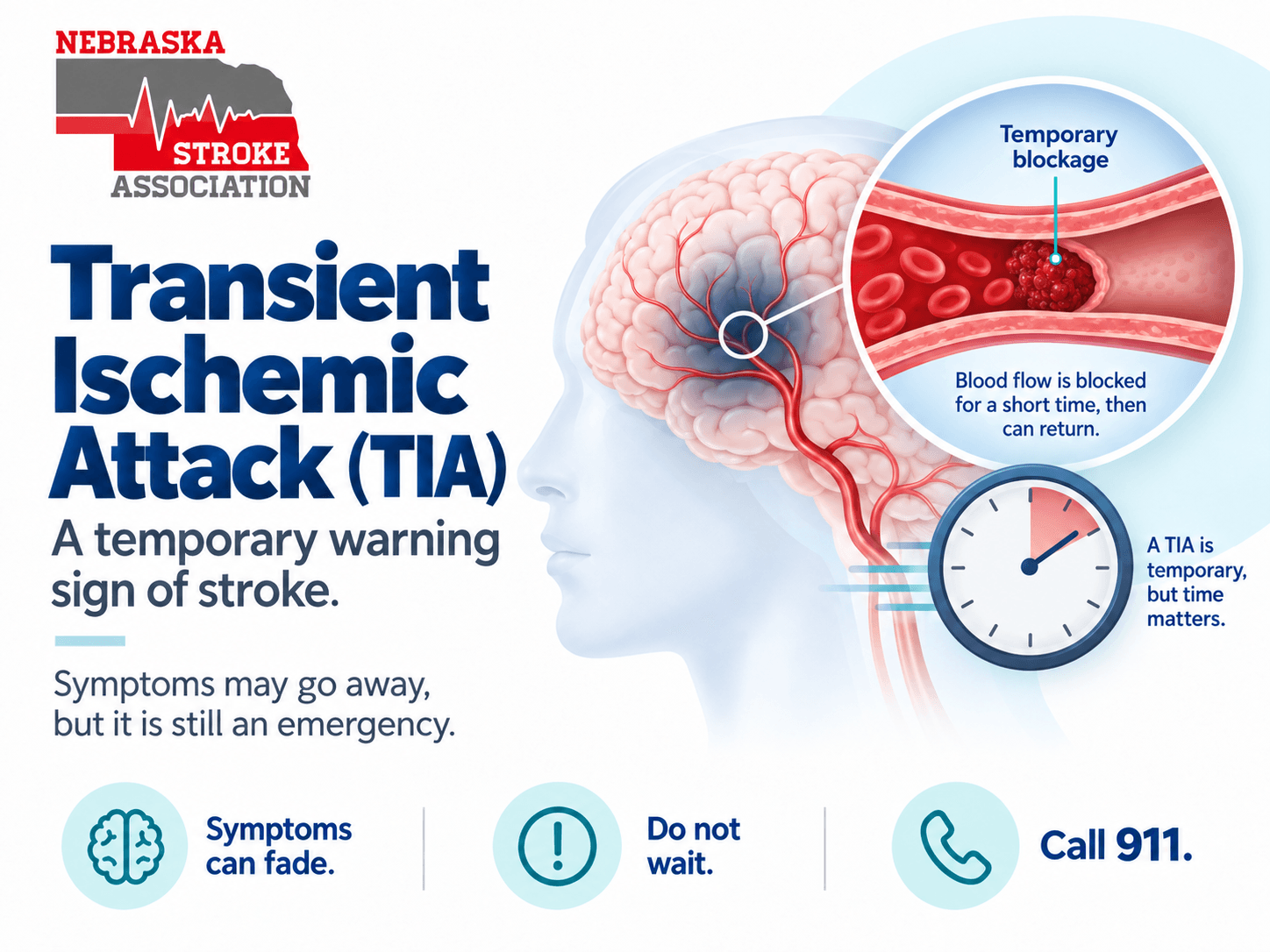
Do not drive yourself or wait to see whether the symptoms improve. Fast treatment can save brain function, reduce disability, and save lives.
This information is provided for general education and should not replace advice from a qualified health-care professional.